
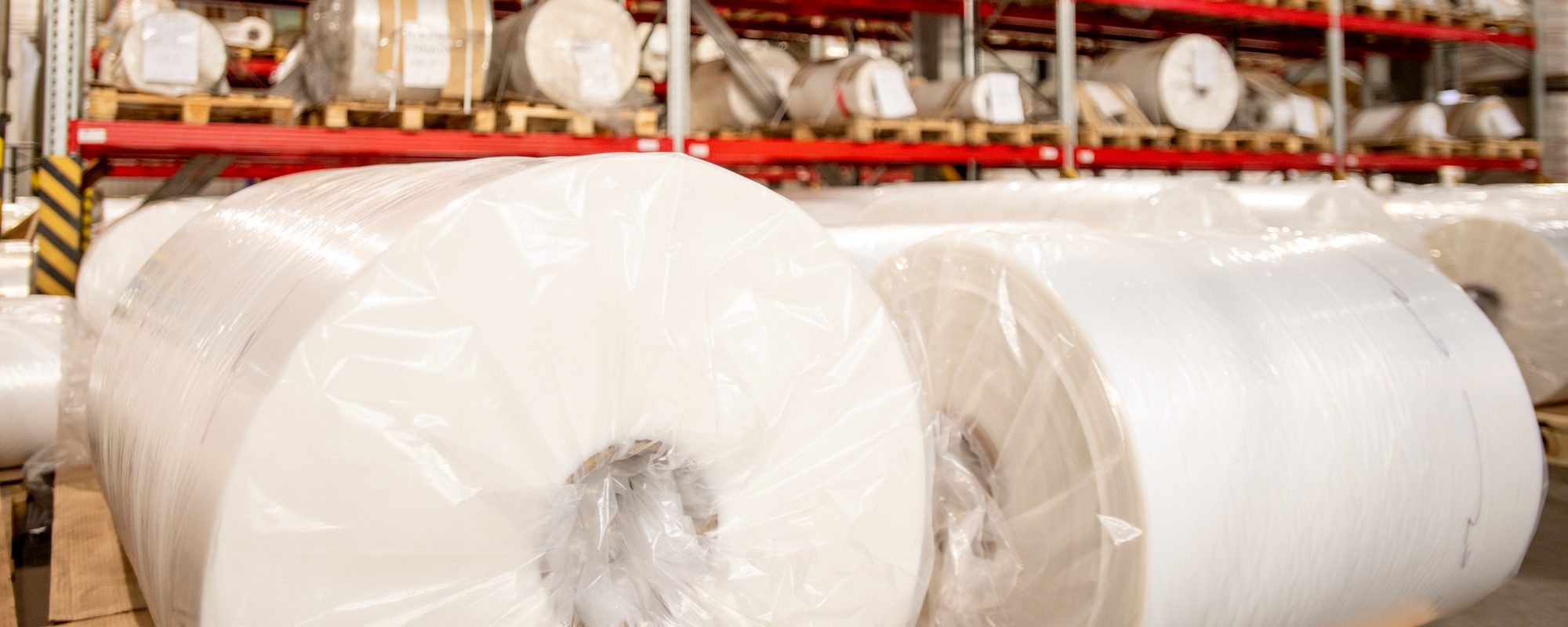
Paper, print and packaging businesses run on tight production timelines that involve the transportation of delicate cargo. The margin for error is small. Late collections can hold up a converting line, while a poorly loaded pallet of paper reels can arrive damaged and unusable.
Manufacturers, converters and distributors moving pulp, paper reels, printed materials and packaging products around the UK will be aware of these risks, and how the choice of transport partner can have a direct bearing on their bottom line and customer relationships.
Choosing the right UK transport company for this sector is a not all about price. The process needs to involve asking harder questions about coverage, handling, capacity and communication.
Here we provide a more detailed breakdown of what to consider.
Reliable schedules and nationwide reach
Print facilities, converting lines and packaging plants operate to fixed schedules – a late collection or a missed delivery window can stall a production run for hours, with knock-on costs felt across the site.
When evaluating a UK transport company, ask how resilience is built into scheduling: what happens if a vehicle breaks down, and how quickly you’re told about changes.
Coverage matters as much as punctuality. A national transport company in the UK, with genuine reach into every region, gives paper and packaging businesses confidence that collections and deliveries can be planned around production needs, not around a provider’s regional gaps. Road transport services that only cover certain postcodes well could have blind spots exactly where suppliers or customers are based.
Responsive communication ties this together. Knowing where a load is, and being told early if something changes, lets production teams adjust their plans rather than react to a delivery that doesn’t turn up.
Vehicles and handling built for the sector
Paper reels, printed materials and packaging products don’t behave like standard palletised freight. Reels are heavy and can shift or crush if not secured correctly. Printed stock and finished packaging are often bulky, sensitive to moisture, or easily marked if handled the wrong way. A generic fleet and a generic approach to loading isn’t built for this.
A good transport partner will use vehicles and handling methods matched to the load as opposed to a one-size-fits-all set-up. In practice, this involves securing reels so they can’t roll or shift in transit, protecting printed materials from crushing or damp, and loading packaging products so the goods at the bottom of the stack aren’t bearing weight they shouldn’t be.
Good practice will do much more than avoiding visible damage on arrival. Products that have been jolted, compressed or exposed to moisture in transit can fail further down the line, on a converting line or a customer’s production floor, even when the problem isn’t obvious at the point of delivery.
A quality provider of UK road and haulage services will understand this and reduce such a risk before it happens.
Flexible, scalable capacity
Order volumes in this sector rarely stay flat. Print runs vary in size, packaging demand shifts with customer promotions and seasonal cycles, and paper and pulp orders can spike with little warning.
A transport partner working to a fixed, inflexible capacity model will struggle to absorb these swings, leaving businesses either paying for capacity they don’t use or scrambling to find it when demand rises.
Urgent orders and seasonal peaks are where this is tested most. A transport logistics provider in the UK with access to scalable capacity, whether through its own fleet or a wider network of trusted partners, can respond to a sudden increase in volume without the disruption of trying to source last-minute cover elsewhere.
This flexibility should work both ways. Just as capacity needs to flex upward during peak periods, businesses shouldn’t be locked into paying for unused capacity during quieter months. The right partner scales transport provision in line with actual demand, rather than forcing customers to plan around a fixed resource.
Choosing the right partner
With so much riding on transport performance, it pays to assess potential partners against a clear set of criteria rather than price alone.
When reviewing a UK transport company, look for:
- Nationwide coverage with a genuine reach into the regions where your suppliers and customers are based
- Vehicles and handling methods which are specifically suited to paper reels, printed materials and packaging products
- Scalable capacity that can flex with seasonal peaks, promotions and urgent orders
- Clear, proactive communication when schedules or loads change
Getting this decision right will reduce disruption, protect product quality and take pressure off internal teams who would otherwise be managing transport problems instead of concentrating on the production of their products. It will also help to build a more resilient supply chain overall, one that can absorb unexpected demand or operational setbacks without service to your own customers suffering as a result.
At bwd, our Paper, Print & Packaging division works with manufacturers, converters and distributors across the UK, using specialist handling and a nationwide network to keep deliveries on schedule and goods in the condition they left the warehouse in.
Find out more about our transport solutions for paper, print and packaging businesses.
Frequently Asked Questions
Look beyond price to nationwide coverage, handling methods suited to reels and printed stock, scalable capacity, and proactive communication when schedules change.
Reels can shift or crush without proper securing, while printed and packaging stock can be crushed, marked or exposed to moisture, sometimes causing problems that only surface later on a converting line or a customer's production floor.
Ask whether they have access to scalable capacity, either through their own fleet or a wider partner network, so they can absorb seasonal peaks and urgent orders without last-minute scrambling.