
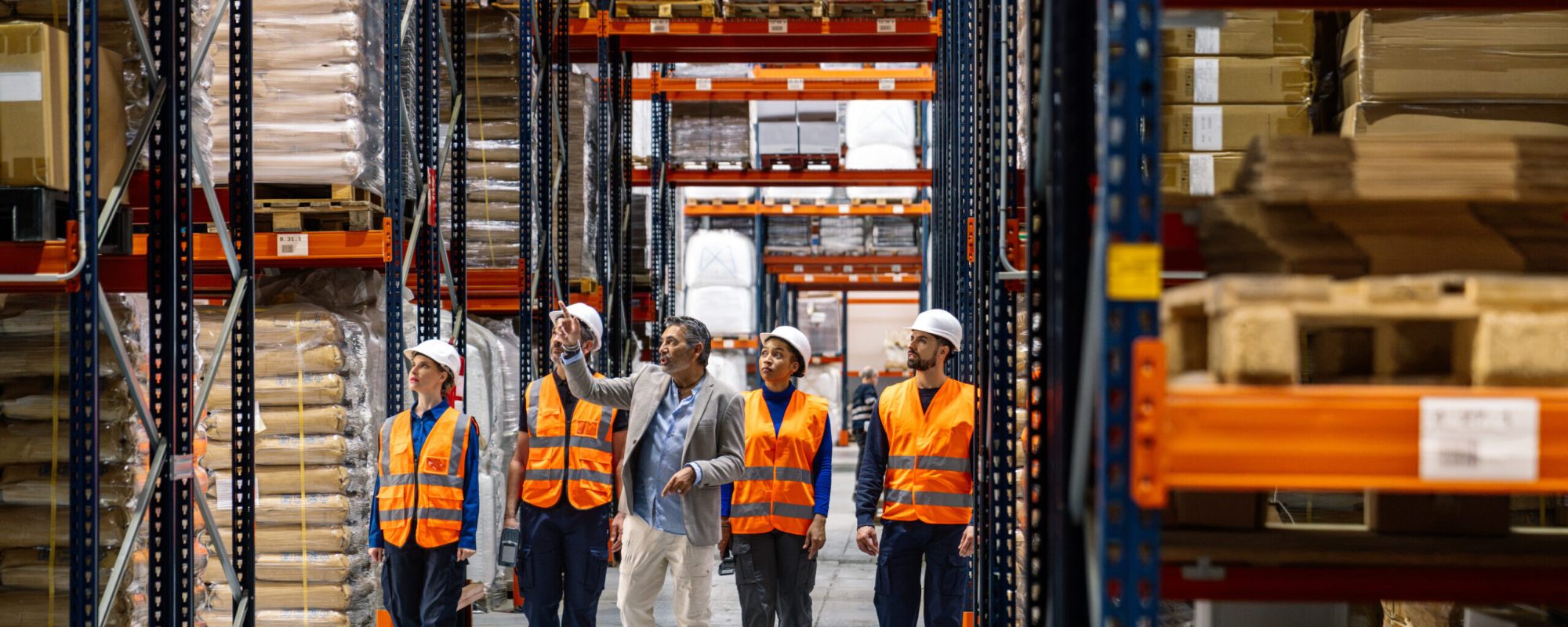
For retail and FMCG businesses, effective transport and logistics is non-negotiable. There’s a reason that consumer-packaged goods companies typically spend 6-8% of their revenue on distribution and transportation costs. With the customer experience increasingly hinging on next-day delivery and product availability, logistics performance has a direct impact on brand reputation and bottom line.
The transport challenges facing retail and FMCG businesses
The combination of high-volume, fast-moving goods and variable demand makes managing retail and FMCG supply chains particularly difficult, where even minor errors can trigger a domino effect of operational issues and financial consequences.
Delivery windows are incredibly tight. In the case of supermarkets, for example, fresh bakery goods ordered at 3am need to reach stores by 6pm the same day.
Equally, delivery timeslots themselves are narrow, typically spanning one hour with a 30-minute tolerance either side. Arrive early and the receiving facility isn’t ready. Arrive late and the slot has closed. Precision within this finite window is critical. Otherwise, production lines can grind to a halt, or warehouse capacity can begin to overflow.
In cases where logistics fails and products are out of stock, consumers won’t wait around. In highly competitive retail and FMCG sectors, they’ll simply turn to other stores, leading to lost sales and customers.
Anticipating demand and adequately aligning supply is, therefore, paramount. However, those requirements change throughout the year.
From Week 40, transport capacity generally needs to increase as Christmas approaches, while similar upticks in demand can also occur around Halloween, Easter and in different seasons depending on the products in question.
Transport solutions that help retail and FMCG businesses stay competitive
The planning challenge is significant. Knowing exactly where logistics capacity should be, and how much capacity will be needed at any given moment, is critical in ensuring service reliability and cost efficiency through both low and high demand periods.
It’s a fine balancing act – one that relies on effective strategies and logistics partners that are proven in their ability to consistently deliver products and help retailers and FMCG firms scale.
It’s an area in which performance depends on specific capabilities. Transport partners with nationwide coverage, for example, can help realise in unlocking economies of scale, and provide FMCG and retail firms with a single provider rather than multiple regional logistics firms.
It’s also important that any provider’s transport capacity is adaptable and scalable, with the ability to add resources during seasonal peaks and promotional campaigns. Further, the provision of updates such as early notifications of issues and live shipment visibility can also help provide peace of mind for retailers and FMCG firms, freeing them up to spend more time focused on operations.
Why reliability matters in retail supply chain logistics
For any business, having a transport logistics partner that can be relied upon to deliver consistently in the face of multiple demands and challenges is often worth its weight in gold.
The standard expectation when it comes to logistics performance is that providers should achieve 98.5% on-time-in-full (OTIF) as a minimum. In other words, for every 100 deliveries, just 1.5 can be late or incomplete.
Falling short of these targets will lead to an unsustainable number of incomplete deliveries and put a retail or FMCG firm’s own reputation and bottom line at risk.
Operational and production bottlenecks can occur, with stock availability and sales suffering. Poorly planned routing and underutilised vehicles can also drive-up costs, undermining already tight FMCG and retail margins. And emissions can also increase through underfilled vehicles, impacting sustainability targets.
Reliable transport partners will work to minimise these potential issues, efficiently planning routes and maintaining strong communications and supply chain visibility to support the operational performance, budgets, environmental ambitions and the long-term growth of their clients.
Choosing the right transport partner
With all these considerations in mind, FMCG firms and retailers must seek out those logistics partners that have a proven track record and the right attributes needed to overcome unique industry challenges. Some of the key things to look out for include:
- Proven retail and FMCG experience: A demonstrable understanding of industry needs, high-volume distribution challenges and delivery protocols.
- National coverage: The ability to deliver consistently to multiple locations across the UK.
- Scalable capacity: Access to additional transport resources that can support seasonal peaks and promotional periods, as well as long-term growth.
- Technology adoption: Real-time tracking, delivery updates and performance reports for important supply chain insights.
- Clear communications: Proactive updates and responsive support when issues do arise.
- Reliability: Strong OTIF performance and high service standards.
With reliable transport having become fundamental to product availability, cost efficiency and customer retention, retail and FMCG firms cannot afford to cut corners.
With more than 30 years of experience supporting retail and FMCG supply chains, Barron Wood Distribution (bwd) understands the operational demands of moving products efficiently across the UK.
To discuss your FMCG or retail logistics challenges and explore how bwd can support your operations, contact our team today.
Frequently Asked Questions
OTIF stands for On-Time In-Full. It’s a metric that indicates whether deliveries arrive on time and with the correct quantity of goods.
Transport partners can help satisfy periods of higher demand for goods by providing additional transport capacity, enabling retailers and FMCG firms to distribute more products during peak trading periods.
Using technologies to track product shipments in real time can help retailers and FMCG companies to identify potential logistics issues and make proactive and informed operational decisions.